
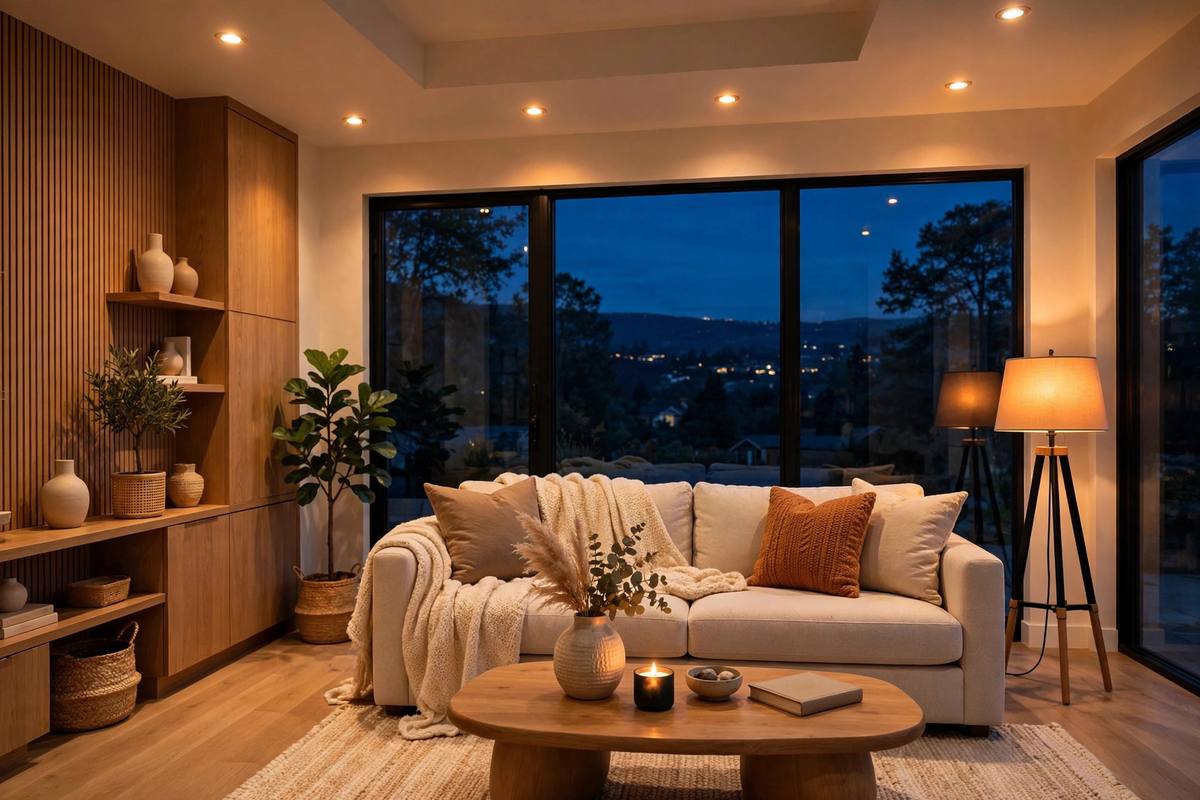
Think about yesterday in your house. The kitchen was bright at breakfast, the living room went soft after dinner, and the porch should have been on before anyone got home. If one switch setting has to serve all three moments, none of them feel right. Smart lighting is not about more lights. It is about the right light at the right hour, without walking around flipping switches.
1. Plan scenes for moments, not for rooms
Forget starting with a list of bulbs. Start with the moments you already live: breakfast, homework, movie night, bedtime, coming home after dark. A breakfast scene is bright and cool in the kitchen. A wind down scene is warm and low in the living room. Give each scene a plain name you would actually say, like breakfast or movie night, and the whole house stops being a settings menu and starts behaving like a home.
2. Dimming matters more than color
Color changing bulbs get the attention, but dimming does the daily work. A lamp at full brightness feels fine at noon and harsh at nine at night. A dimmer, or a bulb that dims smoothly, lets the same room feel awake in the morning and calm in the evening. If you are choosing where to start, warm dimming in the rooms you sit in at night will change how the house feels more than a rainbow in a room you barely use.
3. Put the outside lights on a schedule now that evenings are dark
With the clocks back, the drive home is dark and the porch is the first thing you meet. Porch and path lights on a sunset schedule mean you never come home to a dark entry, and you never have to remember to switch them on. Set them to fade off after bedtime rather than burning all night. It is a small routine, but it is the one guests and family notice first.
4. Keep one switch that always works
Smart lighting should never trap a guest, a grandparent, or a tired kid who just wants the bathroom light on. Keep the wall switch working alongside the app and the voice command, and make sure anyone in the house can turn a room on without a phone. The best test for any lighting plan is simple: can someone who has never seen it turn the light on in the dark?
5. Start with three rooms, not the whole house
The fastest way to stall a lighting project is to try to do every room at once. Pick the three rooms where you spend your evenings: usually the kitchen, the living room, and the porch or entry. Get those scenes right, live with them for a couple of weeks, and then decide what the bedrooms or the patio actually need. A small plan done well beats a big plan that never gets finished.
Not sure which rooms to start with, or why the living room still feels harsh at night? That is exactly what a free home visit is for. We walk the rooms you actually use in the evening, look at how the light falls, and hand you a written plan before you commit to anything.